
Data Center Labeling: What Electrical Contractors Need to Know
Data centers aren’t standard commercial jobs. The equipment is more complex, the stakes are higher, and the labeling requirements reflect that.
If you’re an electrical contractor working in a data center or mission critical facility for the first time — or coordinating a large identification package for a PM — here’s what you need to know before you order a single label.
The Scale is Different
Data center labeling isn’t one panel and a few disconnects. A single project can involve hundreds of labels across multiple systems — PDUs, UPS units, ATSs, generators, switchboards, RPPs, rack systems, and conduit runs — all with precise, project-specific naming conventions.
What inspectors actually care about
- Every piece of major equipment gets identified
- Naming conventions match drawings and documentation exactly
- Labels are ordered in volume, on time, and accurate the first time
Where jobs fail
- Ordering labels piecemeal instead of as a complete package
- Using naming conventions from memory instead of verified drawings
- Underestimating the quantity — and running short before turnover
What works
- Pulling your label list directly from the electrical drawings
- Reviewing naming conventions with the PM before ordering
- Ordering with enough lead time to verify and correct before installation
Jobsite takeaway
In a data center, labeling isn’t a punch-list item. It’s part of commissioning.
PDU and Power Distribution Labels
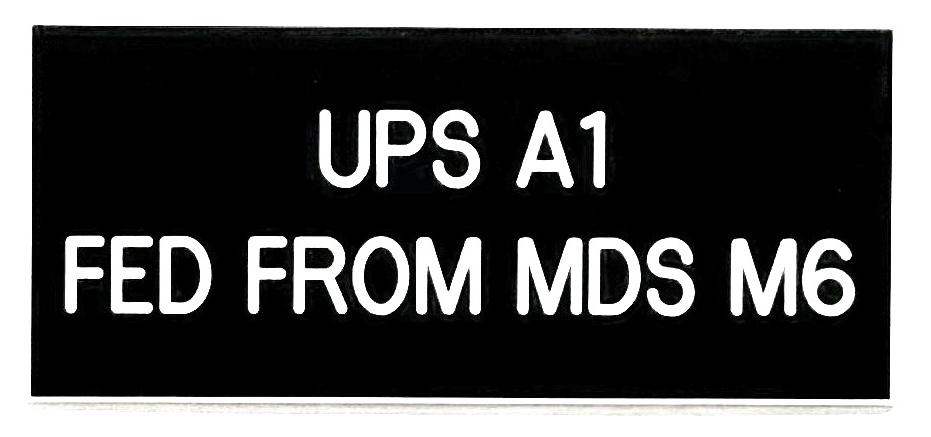
Power Distribution Units are the backbone of data center electrical distribution. Every PDU needs to be clearly identified — and in most cases, that identification needs to show where it’s fed from.
What inspectors actually care about
- PDU identification matches the electrical one-line
- Feed source is identified on the label
- Voltage, amperage, and phase configuration are included when specified
Where jobs fail
- Generic labels that only show the PDU name with no feed information
- Labels that match the design drawings but not the as-built conditions
- Missing voltage or amperage information required by the spec
What works
- Two-line labels: PDU designation on line one, feed source on line two
- Confirming label content against final as-built drawings
- Including voltage and phase when the spec or PM requires it
Jobsite takeaway
A PDU label that doesn’t show where it’s fed from is half a label.
UPS, ATS, and Generator Labels
Uninterruptible power supplies, automatic transfer switches, and generators are mission critical equipment. Their labels need to communicate clearly — especially during an emergency.
What inspectors actually care about
- Every UPS, ATS, and generator is individually identified
- Feed sources and transfer paths are clearly labeled
- Labels are durable enough for mechanical rooms and outdoor environments
Where jobs fail
- Labels that identify the unit but not the feed source
- ATS labels that don’t show both normal and alternate sources
- Generator labels with unit number only — no amperage or fuse information
What works
- Two-line ATS labels: unit designation plus “FED FROM [SOURCE A] AND [SOURCE B]”
- Generator labels that include unit number and relevant electrical specifications
- Outdoor-rated materials for generators and exterior equipment
Jobsite takeaway
During a power event, someone needs to understand your labels in seconds. Design them accordingly.
Rack and RPP Identification
Server racks and Remote Power Panels need clear, consistent identification — especially in large data halls with dozens or hundreds of racks in systematic rows.
What inspectors actually care about
- Rack identification is consistent with the data center’s naming convention
- RPP labels include unit designation and physical location
- Labels are high-visibility and readable from a distance
Where jobs fail
- Inconsistent rack naming that doesn’t match the floor plan
- RPP labels with unit designation only — missing location information
- Small labels on large equipment that can’t be read without getting close
What works
- Large-format rack labels with bold, high-visibility text
- RPP labels that include both unit designation and room/phase location
- Consistent naming across racks, RPPs, and documentation
Jobsite takeaway
In a data hall, a visitor should be able to navigate by the labels alone.
Conduit and Feeder Identification
Large feeders and conduit runs in data centers need identification — and the tags need to survive the environment.
What inspectors actually care about
- Major feeders and conduit runs are identified
- Tags are durable enough for the installation environment
- Identification is consistent with the electrical drawings
Where jobs fail
- Tags that aren’t rated for the environment — especially in wet locations, mechanical rooms, or exterior utility connections
- Conduit identification that doesn’t match the drawing designations
What works
- Engraved plastic tags zip-tied or fastened securely
- Outdoor-rated materials for exterior conduit runs and utility connections
- Circuit designations pulled directly from drawings
Jobsite takeaway
If someone has to trace a feeder to figure out what it is, the labeling isn’t done.
Naming Conventions Matter More Here
On a standard commercial job, minor inconsistencies in naming are inconvenient. In a data center, they can cause real problems during commissioning, service, or an outage.
What inspectors actually care about
- Label text matches drawings, documentation, and the facility’s naming system
- Abbreviations are consistent and understood
- No improvised naming in the field
Where jobs fail
- Field crews using shorthand that doesn’t match the official naming convention
- Labels ordered from memory instead of verified drawings
- Discrepancies discovered during commissioning — after labels are installed
What works
- Getting the naming convention in writing from the PM before ordering
- Reviewing a sample label against drawings before full production
- Treating label content as a submittal item, not a field decision
Jobsite takeaway
In a data center, the naming convention isn’t a suggestion — it’s part of the spec.
Final Jobsite Takeaway
Data center labeling is commercial electrical labeling at scale — with higher stakes, more systems, and less room for error.
Get the naming convention right. Order from verified drawings. Treat labeling as part of commissioning, not cleanup.
When the labels are accurate, consistent, and in place at turnover, the job is done right.