
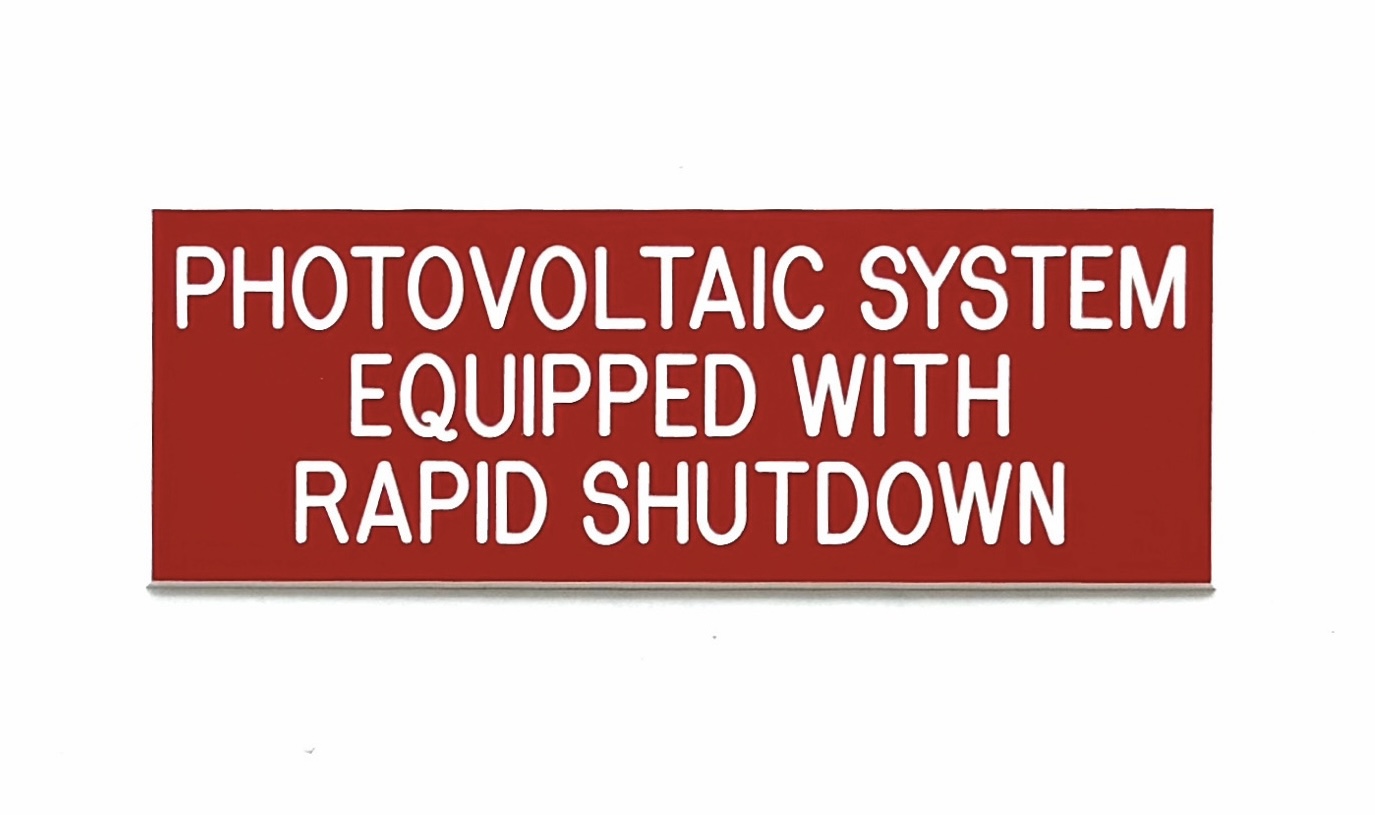
Solar PV System Placards: Staying Compliant with Rapid Shutdown Rules
Solar labeling problems rarely come from missing equipment. They come from missing or unclear placards, where PV systems are part of a larger electrical installation.
Rapid shutdown requirements have made PV labeling more visible, more specific, and more closely inspected than ever. When placards are incomplete, poorly placed, or don’t match the system installed, inspectors stop the job—even when everything else looks right.
This Field Notes breakdown focuses on what inspectors actually look for on solar PV systems, where projects get flagged, and how to avoid last-minute rework. Proper placard placement helps inspectors and emergency responders quickly identify PV systems without searching or guessing.
What inspectors actually care about
Inspectors are looking for clear, immediate identification of the PV system and its shutdown method.
They want to see that:
- Required placards are present
- Wording is clear and legible
- Placards accurately describe the installed system
- Emergency responders can understand the system without additional explanation
If an inspector has to ask questions to interpret a placard, it’s already a problem.
Where solar PV jobs fail inspection
Most rapid shutdown labeling issues fall into a few repeat categories.
Common failures include:
- Missing placards at required locations
- Placards with wording that doesn’t match the system configuration
- Generic labels copied from a previous project
- Placards installed where they aren’t easily visible
- Labels added late, after the system layout changed
These issues aren’t theoretical—they’re some of the most common reasons PV inspections stall.
Rapid shutdown wording issues
Rapid shutdown placards are especially sensitive to wording.
What inspectors actually care about
- The placard clearly states how the system shuts down
- The description matches the equipment installed
- No ambiguity about conductors remaining energized
Inspectors don’t want marketing language — they want clarity.
Where jobs fail
- Overly generic wording
- Placards that reference equipment not actually used
- System changes made in the field without updating placards
What works
- Placards reviewed against the final as-built system
- Clear, plain-language descriptions
- Consistency between placards, drawings, and equipment
Jobsite takeaway
If the wording doesn’t match the system, the placard doesn’t pass.
Placard location and visibility
Having the right placard isn’t enough if it’s in the wrong place.
What inspectors actually care about
- Placards are placed where required
- Information is visible without searching
- Placards aren’t hidden behind equipment or conduit
Where jobs fail
- Placards mounted inside enclosures when they should be external
- Labels placed too far from the equipment they identify
- Multiple placards clustered together without clear purpose
What works
- Placing placards where they’re immediately visible
- Matching placement to inspection expectations
- Treating visibility as part of compliance, not aesthetics
Jobsite takeaway
If it can’t be seen quickly, it may as well not be there.
Permanence and durability
Solar placards are expected to last.
What inspectors actually care about
- Placards remain legible over time
- Information doesn’t fade or disappear
- Placards stay attached under normal outdoor conditions
Where jobs fail
- Temporary or printed labels used as permanent placards
- Placards that degrade before final inspection
- Labels that loosen or fall off after installation
What works
- Permanent, engraved placards appropriate for outdoor exposure where code requires permanent identification
- Secure mounting that reflects long-term use
- Treating durability as part of system safety
Jobsite takeaway
If a placard won’t last, inspectors won’t accept it.
Consistency across the PV system
Solar systems often involve multiple placards across different locations.
What inspectors actually care about
- Consistent terminology across all placards
- Alignment between labels, drawings, and system layout
- No conflicting or redundant system information
Where jobs fail
- Different wording used on different placards
- Old placards left in place after system changes
- Inconsistent descriptions of the same system
What works
- One clear description used consistently
- Reviewing all placards together before inspection
- Catching mismatches early, not at final walkthrough
Jobsite takeaway
Consistency reduces questions—and questions slow inspections.
Final Jobsite Takeaway
Solar PV placards aren’t just documentation—they’re part of system safety.
Clear wording, proper placement, and durable identification help inspections move smoothly and ensure emergency responders can understand the system instantly. When placards reflect what’s actually installed, rapid shutdown compliance becomes straightforward instead of stressful.