
Top 5 Jobsite Labeling Mistakes (and How to Avoid Them)
If a project fails inspection because of labeling, it’s rarely because someone didn’t try.
It’s usually because a small detail got missed—material, wording, mounting, or consistency.
Here are the five most common labeling mistakes inspectors flag on jobsites, and how to avoid them before they cost time, rework, or credibility. Many of these issues can be avoided with custom engraved phenolic labels designed for long-term jobsite use.
1. Using the Wrong Material Outdoors
What inspectors actually care about
- Labels remain legible long-term
- Information is permanent and durable
- Labels don’t peel, fade, or disappear over time
Where jobs fail
- Vinyl or sticker-style labels used outdoors
- Printed labels that fade or wash out
- Temporary materials used as permanent identification
What works
- Engraved plastic labels for outdoor equipment
- Materials selected based on exposure and environment
- Choosing durability based on where the label is installed, not just the equipment type
Jobsite takeaway
If it lives outside, treat it like it’s going to be inspected again in five years—not five days.
2. Labels That Aren’t Actually Mounted
Yes, this happens. A lot.
What inspectors actually care about
- Labels must be securely affixed
- Adhesive-only labels must be appropriate for the surface and environment
- Loose labels = noncompliant labels
Where jobs fail
- Adhesive backing on dusty, oily, or textured surfaces
- No fasteners provided for metal equipment
- Labels handed off to “someone else” to install later
What works
- Mounting methods matched to surface and environment
- Mechanical fastening where vibration or heat is present
- Treating installation as part of compliance, not a follow-up task
Jobsite takeaway
If it’s not mounted, it’s not labeled.
3. Inconsistent Naming Across Equipment
This one drives inspectors (and maintenance teams) nuts.
What inspectors actually care about
- Equipment IDs match drawings and panel schedules
- Naming is consistent across labels, tags, and documentation
- No guessing which disconnect feeds what
Where jobs fail
- “Panel A” on one label, “Panel A1” on another
- Abbreviations that don’t match plans
- Field crews improvising names mid-install
What works
- One naming convention per project
- Labels reviewed against drawings before engraving
- Asking clarifying questions before production
Jobsite takeaway
Consistency beats creativity every time.
4. Missing Required Information
A label can exist and still be wrong.
What inspectors actually care about
- Required wording is present
- Voltage, source, or system identification is clear
- Safety information isn’t implied—it’s stated
Where jobs fail
- Partial information
- Assumptions about “standard” wording
- Copying labels from older projects with different requirements
What works
- Verifying required text for the system type
- Matching label content to current code requirements
- Treating wording as seriously as material selection
Jobsite takeaway
Close enough doesn’t pass inspection.
5. Waiting Until the End of the Project
Labeling is often treated as a last-minute task. Inspectors notice.
What inspectors actually care about
- Complete, permanent identification at inspection
- No temporary placeholders
- No “we’ll add that later” explanations
Where jobs fail
- Labels ordered too late
- Rush orders with incomplete information
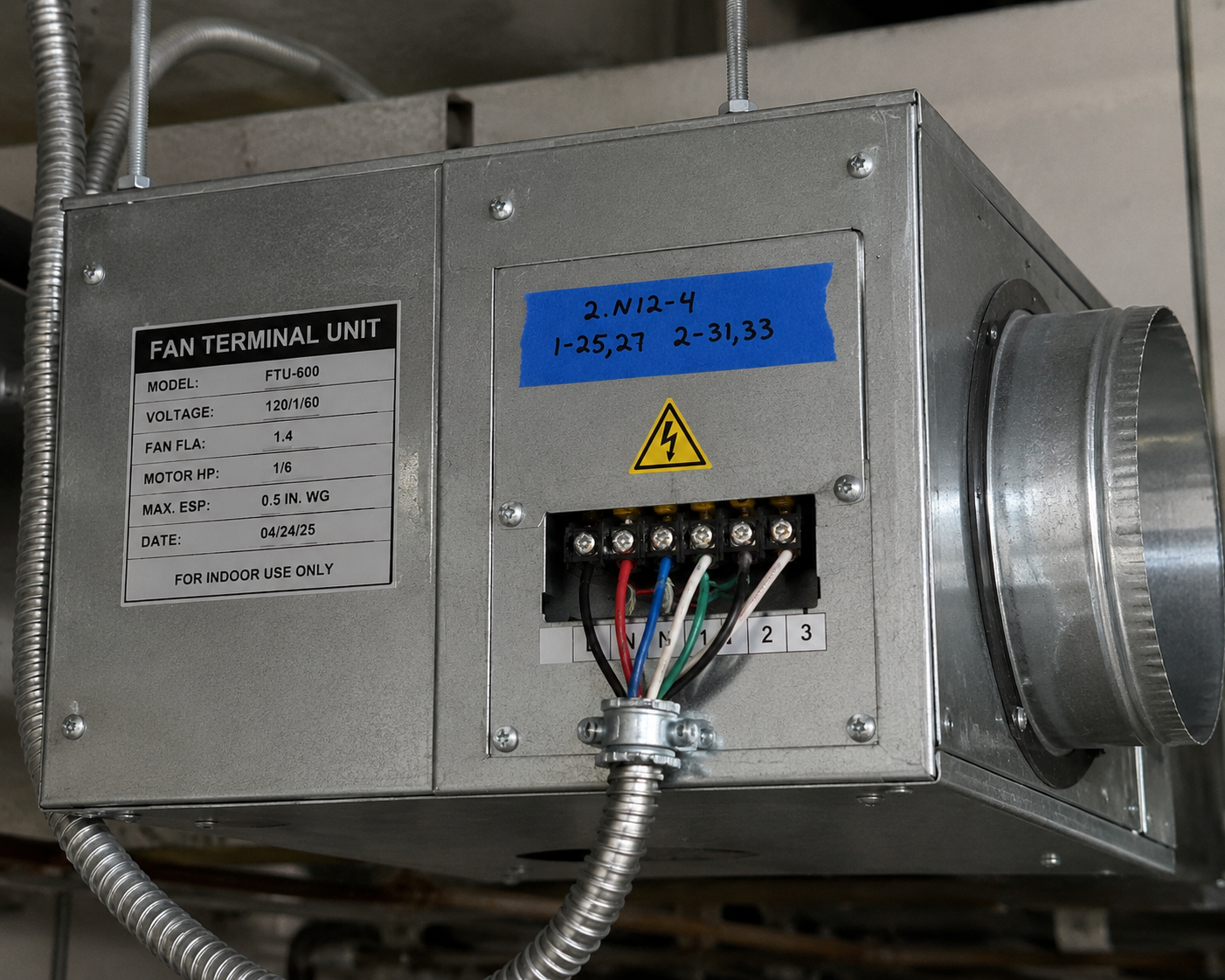
- Field-installed Sharpie “solutions” (yes, really)
What works
- Ordering labels alongside equipment
- Treating labeling as part of the install—not cleanup
- Having a clear ordering process early in the project
Jobsite takeaway
Labeling isn’t a finish detail—it’s an inspection requirement.
Jobsite Takeaway
Most labeling failures aren’t dramatic—they’re small, avoidable misses.
Right material. Right wording. Right mounting. Right timing.
Get those four right, and labeling stops being the thing that holds up inspection.